
The Outsider Finds Company
H is for HawkHelen’s hawk makes her visible as an outsider, yet encounters with strangers and friends gradually reveal forms of community she had not expected.
increasing Bearing strength in each event
 decreasing
Bearing strength in each eventdecreasingA New Figure in the Park
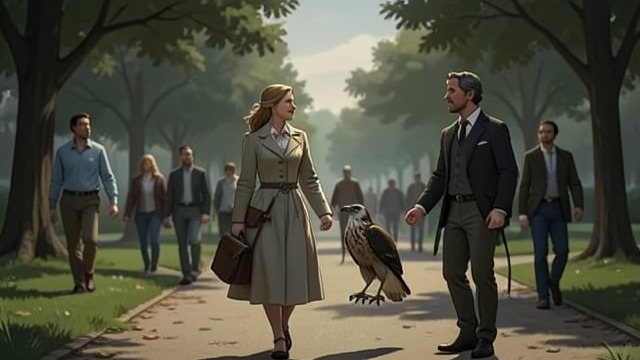
Walking Among Strangers
A Changed Street
Helen carries Mabel through a park and finds ordinary passersby newly alarming. She hides from people even as she is trying to accustom the hawk to them.
A Brief Encounter
A runner stops to apologize for startling them and responds with curiosity rather than hostility. Helen recognizes him as a person after first experiencing him as a threat.
The exchange hints at a human world she has not entirely lost.
An Outsider’s Confession
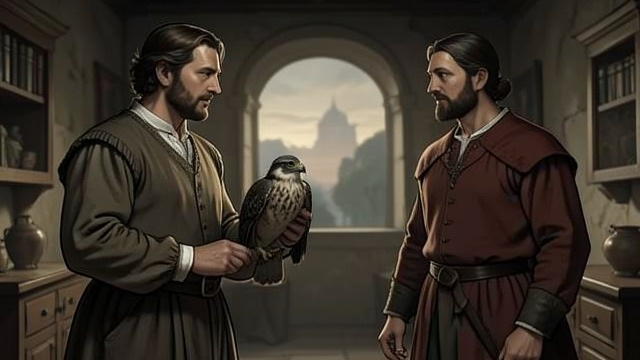
Conversation at the Fence
A Meeting from Elsewhere
A man from Kazakhstan approaches Helen and speaks about falconry and his home country. He handles Mabel’s hood and says that he misses his country.
A Hawk as Invitation
Another stranger admires Mabel and speaks of the freedom he associates with watching hawks. Helen notices that the people who approach are often outsiders themselves.
The hawk makes a brief bridge across loneliness and displacement.
A Hostile Assumption

Gender and Misreading
An Unwanted Explanation
A man suggests that Helen and the female goshawk get along because they share a gender. Helen feels mocked and returns home angry.
Reading the Old Books
She finds that later falconry writers repeatedly describe female goshawks as sulky or contrary. Earlier accounts instead acknowledge fear and self-will while insisting on courteous treatment.
The encounter opens a larger question about how human prejudice shapes descriptions of animals.
A Fairground Fellowship
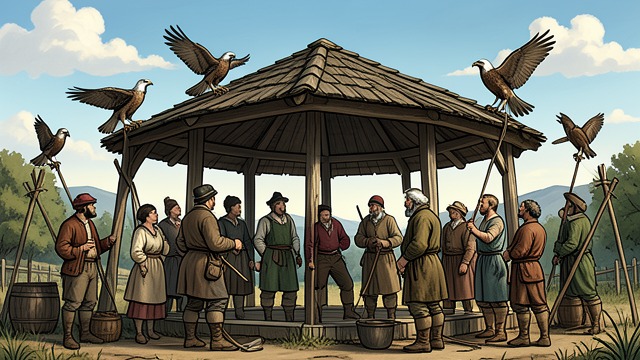
Finding Her Place
The Falconers’ Gathering
Helen brings Mabel to a small rural fair with other falconers and their birds. The mixture of occupations and backgrounds contrasts with the old image of falconry as an exclusive gentleman’s pastime.
A Shared Interest
The company’s conversation and practical familiarity give Helen a moment of belonging. A visitor tells her that he has always wanted to fly hawks but never found the time.
The gathering reveals community as a practice rather than an inherited status.
A Human Welcome
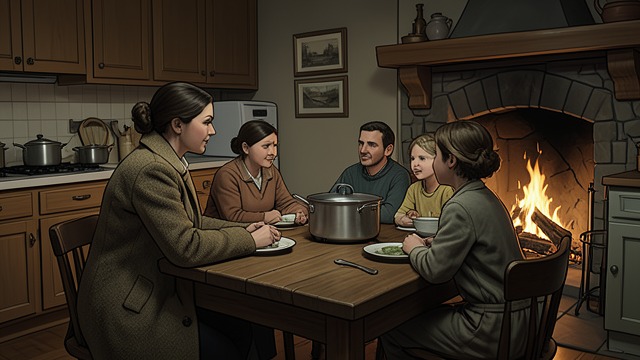
Home Beyond the Hawk
A Family’s Hospitality
Helen and her mother spend Christmas with friends in Maine. The household’s work, meals, and easy company offer a form of belonging different from Helen’s solitary life on the hill.
Carrying Care Home
After returning to England, Helen thanks Stuart and Mandy for looking after Mabel and recognizes how much their friendship has mattered. The hawk has not replaced human ties; it has helped her rediscover their value.
Community becomes something she can accept rather than flee.
Mabel’s first evenings outside
during Mabel’s early carriage in the park
after Mabel becomes calm around Helen
during Apple Day in autumn
Christmas, during Helen’s visit to Maine
